
Not all LED tubes perform the same at a real gig. Here are the four things that separate a professional wireless pixel tube from a cheap colour stick.
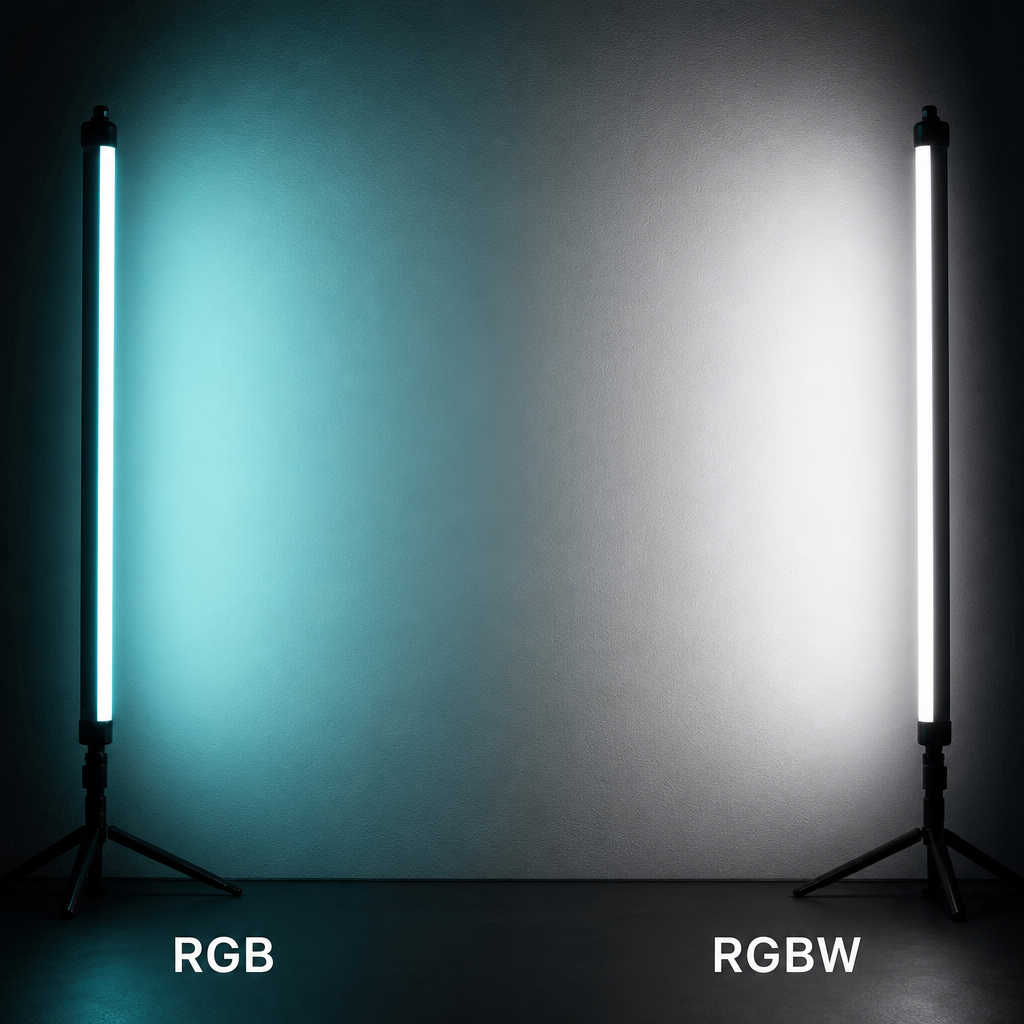
1. RGB vs RGBW: Colour Quality
RGB
- White = red + green + blue mixed
- Visible blue-green tint on surfaces
- Pastels muddy, skin tones off
- Colour shifts when dimmed
RGBW
- Dedicated white LED chip
- True neutral white, accurate pastels
- Consistent at any brightness
- Higher CRI — colours look real
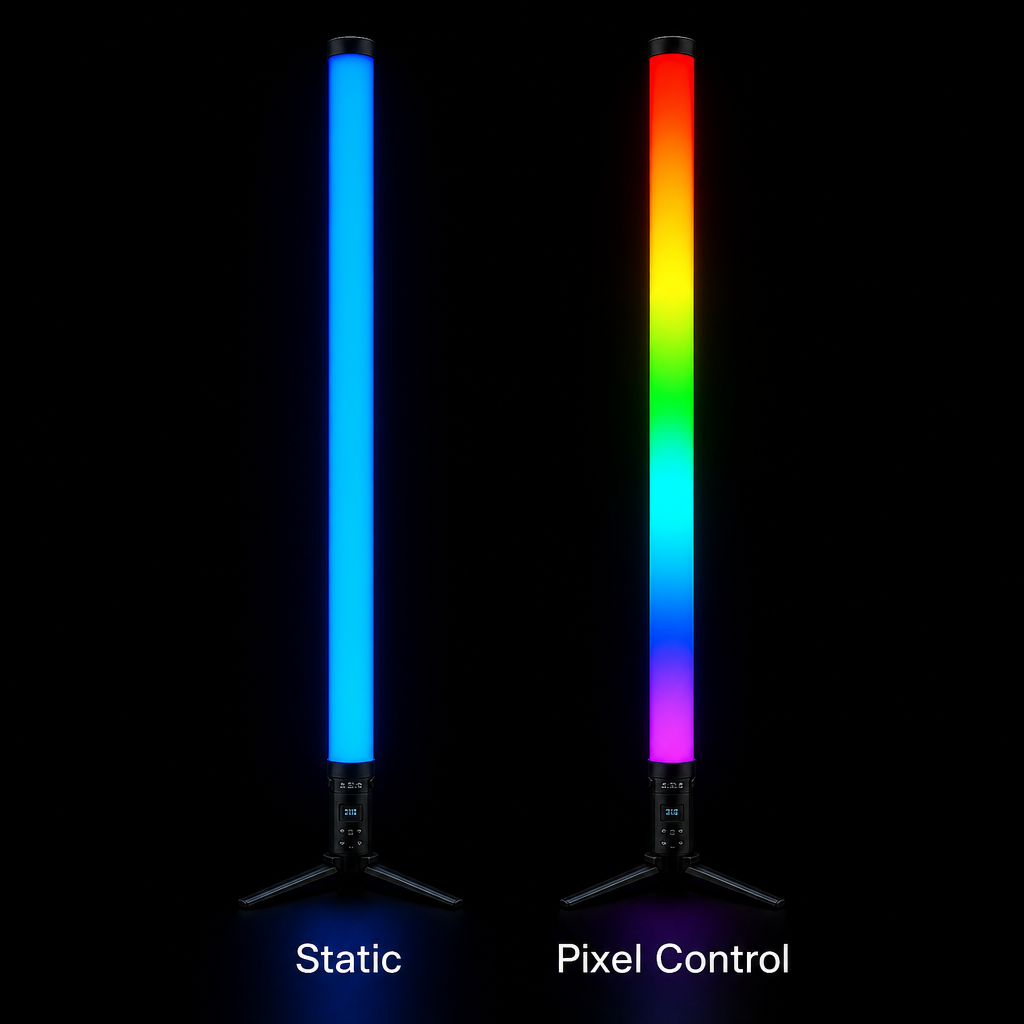
2. Static vs Pixel Control
Static
- One colour across the whole tube
- No movement or patterns
- Looks like a coloured fluorescent
Pixel Control
- Each segment controlled independently
- Wave effects, chases, gradients
- Pixel mapping from any lighting software
3. Wireless Control Protocols
2.4GHz Wireless DMX
- No WiFi or router needed
- Donner or generic transmitter into your DMX chain
- Instant setup — best for mobile DJs
WiFi DMX (sACN / ArtNet)
- Runs over a WiFi network
- Full pixel mapping via Resolume, QLC+
- Best for fixed installs and software shows
Also AvailableBluetooth app — pick a colour, pick an effect, done. No DMX gear needed.
4. Sound Reactive: BPM Detection
Most budget tubes react to volume. A tube with a built-in BPM detector locks onto the musical tempo and syncs effects to the actual beat — the difference is immediately visible to any audience.
What to look forBuilt-in microphone + BPM detector. Effects sync to the tempo, not just the volume.
Build & Certification Checklist
- Polycarbonate body — not acrylic, which cracks when dropped
- Tripod mount — standard ¼-20 thread, fits any stand you own
- Under 2 lb — no counterweights needed for rigging
- cETLus certified (Intertek) — required for commercial use in Canada
The KeyLight PT-120

The KeyLight PT-120 checks every box: 120 cm RGBW pixel tube, 2.4GHz wireless DMX, WiFi DMX via sACN/ArtNet, Bluetooth app, built-in BPM detector, multi-tube sync, polycarbonate body, ¼-20 tripod mount. Designed and engineered in Montréal — cETLus certification in progress.
Be First When Orders Open
No commitment — just first access and early-bird pricing.